














Inspired for an Adventure? Check out Beef Stroganoff - Pouch and Beef Stew - Pouch


Winter's here, but that doesn't mean hiking season's over. Obviously, skiers and snowshoers are hitting the trails wherever adequate snow allows, but the cold months also hold plenty of opportunity in many parts of the country for boot-shod winter hikers.
After all, lots of places don't see much more than a short- lived wintertime snow, with extensive bare-ground footpaths inviting exploration from the flanks of the Appalachians and Ozarks to the Rocky Mountain foothills of south-central Colorado's "Banana Belt." Not to mention the vast desert basins and ranges of the American Southwest, where hiking conditions are often optimum over the winter months. And other regions may have only shallow snow cover or long miles of hard-packed, highly hikeable winter trails to enjoy.
This time of year, crowds can be virtually nonexistent (especially refreshing in national parks that may be congested in summer) and wildlife easier to spot, with the profound, peaceful silence of the season casting its utterly magical spell.
Long story short, Old Man Winter frequently smiles upon the well-prepared, well-equipped hiker. And those are keywords: Winter hiking demands smart planning, proper gear, and season-tuned safety awareness, as there are certainly some significant hazards to be mindful of. The "Four P's of Winter Safety" will help you minimize those hazards:
- Preparation
- Protection
- Pacing
- Prevention
From winter hiking gear to the basics of how to hike in cold weather, read on to bone up on winter hiking essentials!
The Most Important Rule of Winter Hiking: Prepare Thoroughly
The first of the Four P's of Winter Safety is perhaps the single most critical. Preparation is the absolute foundation of safe cold-weather hiking and backpacking. It helps you better understand the terrain and weather you'll be trekking through, and outfits you not only for the basics of how to hike in the winter but also for potential emergencies that might arise. At least in many regions, this season heightens the stakes of outdoor recreation, with some very real dangers—from hypothermia to avalanches—that can all too easily be underestimated or ignored.
What to Wear: Your Winter Hiking Outfit
The nuts-and-bolts of planning your winter hiking garb aren't really any different from warm-season hiking. After all, recreating outdoors in the elements at any time of year means being able to respond to changing conditions and the potential for inclement weather. But certainly you need heavier-duty clothing to stand up to the season's cold, wind, and possibly freezing precipitation.
Dress in Layers: Base, Mid, & Outer Shell
Layering is of year-round importance to hikers, but, again, the necessity of a wisely chosen system of layers is all the more essential in cold conditions. Your body temperature can quickly get into dicey straits if you don't have the right layers—or if you aren't managing your layering system properly.
You want a base layer composed of moisture-wicking fabrics that keep your skin as dry as possible; an insulating mid layer that traps your body heat; and an outer layer, some form of windproof and waterproof shell, to provide a shield against the often-gnarly winter elements.
Cotton is not your friend here: It's not breathable enough, and takes a long time to dry—and you certainly don't want to be wearing a soaking-wet base layer for an extended period when the temps are nippy. Go with synthetic blends, wool, and down coats/jackets.
Leggings come in handy during cold weather, as do waterproof gaiters for minimizing how much snow or ice gets into your boots and buffering/warming your pant legs.
For your hands, mittens keep you warmer than gloves, but it's a good idea to wear fleece liner gloves underneath mittens or overmitts so you've got protective handwear that facilitates more fiddly fine-motor tasks. Bring an extra pair of gloves, kept in your pack, in case your main ones get wet, as well as some hand warmers.
Footwear
Wool or synthetic socks (with a backup pair) are best for winter hiking. Thicker socks translate to warmer feet, but don't go so thick that you're cutting off circulation down there: That's counterproductive to staying toasty.
Waterproof hiking or backpacking boots are often sufficient depending on the nature of your winter hiking, but more severe conditions may warrant the need for specialized winter or mountaineering boots. (We'll get to the traction devices you'll likely want to at least bring along shortly.)
And don't forget the toe warmers!
Head
Pack a good winter hat, and consider bringing a headband as well to help you better thermoregulate while exerting yourself out in the cold. A neck gaiter is an awesome accoutrement, able to double as a face mask if need be. A balaclava can be all the more helpful in rough temps or biting winds.
Winter Hiking Gear to Stay Safe & Warm
Here are some other winter hiking essentials to keep you toasty, safe, hydrated, and well-nourished on the icy trails.
Traction Devices
If you'll actually be hiking on snow, or expect at least some icy sections, you'll likely want traction devices. Microspikes may do the trick on gentler terrain, but for frozen-over steeps, invest in heavier-duty crampons.
Trekking Poles
Trekking poles help you stay stabilized amid the unsure, slippery footing of typical winterscapes. Install baskets if you're using them on soft or slushy snowpack.
Headlamp With Extra Batteries
Night falls early in winter, and the short daylight hours can make it challenging to plan a hike around. You definitely want to have a headlamp with you—extra batteries for it, too—even if you don't intend to be out past dark.
Food/Snacks
You burn that many more calories huffing and puffing out in the snow, ice, and cold, and you probably aren't going to feel like stopping for long periods of leisurely lunching, given the elements. High-energy snacks with a sturdy fatty component (for slower-burning metabolic heat) and that are easy to munch on the move, such as chocolate bars, candies (gummy bears, etc.), nuts, and cheese, should be your go-to.

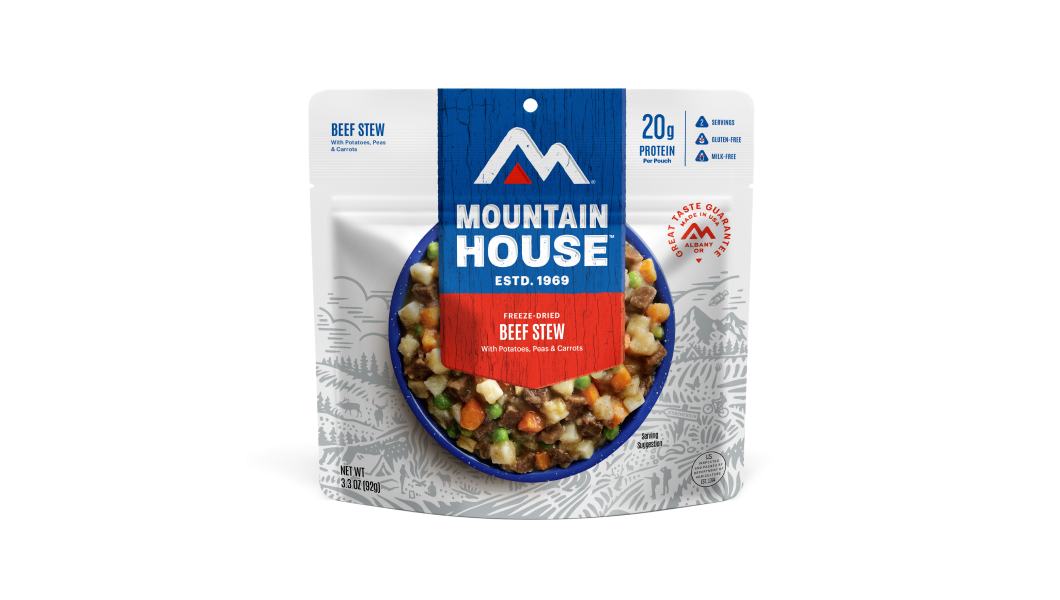
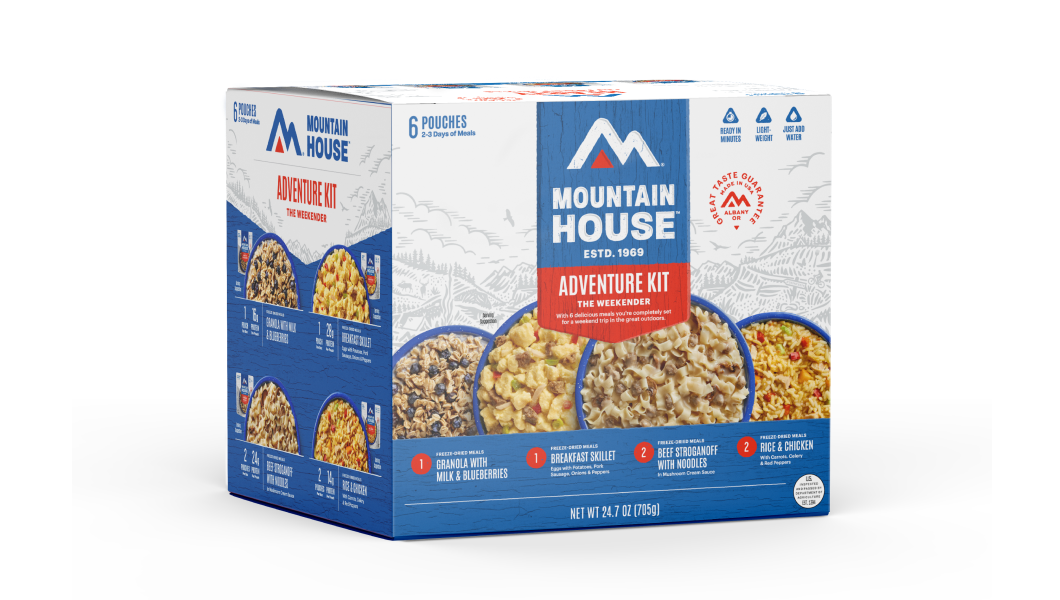
For a warming trailside lunch that's quick to prepare, you can't beat Mountain House meals! Our freeze-dried pouches offer nutritious, energy-rich, comfort-food eats that rehydrate in minutes with hot water, making them perfect for the winter wilds.
Hydration
The intensified exertion of winter hiking means you need to pay just as much attention to adequate hydration as during any other time of year on the trail. If you're using a hydration pack, insulate the drink tube to keep it from freezing. A water bottle, stowed upside down in your pack, is a better choice in frigid temperatures. Pack a thermos with hot tea or soup, so you've got a warming beverage along as well.
Sun Protection
More than a few winter hikers fail to protect themselves from sun exposure, mistakenly assuming it's not something to worry about during the cold stretch of the calendar. But snow-hiking can intensify your UV exposure, given the strong reflection off the snowpack, and meanwhile, the frequent thin overcast of wintertime doesn't mean there isn't a goodly amount of solar radiation filtering through. Wear and reapply sunscreen as needed, being sure to cover your neck, jaw, nose, and other body parts especially vulnerable to reflected sunshine off the ground.
Sunglasses or snow goggles further protect you from UV exposure as well as the painful and debilitating malady of snow blindness.
The Ten Essentials
From firestarting materials and a first-aid kit to an emergency shelter, you'll want to pack wilderness-safety essentials in case of contingencies, such as bad weather, injuries, or disorientation. For navigation, be sure you've got paper maps and a good compass to back up your mapping/wayfinding electronics.
Avalanche Gear
If you're headed into avalanche terrain, it goes without saying you should have such essential gear as a shovel, avalanche probe, and beacon with you—reinforced, naturally, by avalanche-safety training you've completed ahead of time!
Pre-Hike Safety Checks Before You Reach the Trailhead
You really need to do your homework before embarking on a winter hike, not least in terms of scrutinizing the weather forecast multiple times ahead of your outing. You want to get a firm sense of how cold it might be, taking into account windchill, as well as the potential for rain, freezing rain, sleet, or snow. Weigh the relative risks to decide whether it may simply be too frigid or inclement to be out there.
It goes without saying that if you're venturing into more rugged terrain, you should religiously study the avalanche forecast and abide by any and all advisories. On higher-risk days, avoid avalanche-prone terrain or simply abort your hiking plans: Snowslides are nothing to play around with, and it's better to be safe than sorry.
Investigate trail conditions ahead of time to find out whether your route may be snow- or ice-covered, muddy, or if there are any washouts, downed trees, or other obstacles.
And, of course, share your winter-hiking plans with others, informing them where you're going, how long you intend to be out, and who you're with.
On the Trail: Winter Hiking Tips
If you're moving on icy or snow-covered trails (or cross-country routes), remember that your winter-hiking progress will inherently be slower. Plan accordingly and set realistic goals in terms of mileage and time out.
Speaking of time, get an early start: Not only are those winter days unforgivingly short, but the snowpack will tend to be firmer and easier to travel over early in the day, getting softer, slushier, and "sinkier" by afternoon.
Sync your pace and activity with your layering system. Unless the elements are really ferocious, you'll generally want to strip down somewhat while actively hiking, because you don't want to sweat excessively: If you're overly bundled up, you can find yourself uncomfortably—even dangerously—chilled upon taking a break. Layer up when you stop for a rest, then shed layers when you get moving again.
Pay attention to your extremities, keeping head and hands and feet warm; monitor your hydration; and keep that snack train regularly rolling to maintain energy levels.
Identifying, Avoiding, & Mitigating Winter Hazards
Avalanche-wise, your responsibilities aren't over just because you've chosen a route based on your local avalanche center's forecast. You need to stay mindful of avalanche risk moment-by-moment, assessing factors such as snowpack, slope, terrain traps, and weather constantly to steer yourself along the safest way. Be ready to bail if you're seeing too many warning signs.
Avalanches aren't the only winterscape terrain hazards, of course. Watch out for especially icy slopes, pockets of deep snow where you're likely to flounder, and the snow moats that often form around trees and outcrops. If you're traveling along ridges and spurs, stay well clear of cornices, as their breakout zones may extend surprisingly far back upon the ridgetop. Be ready to employ your traction devices as needed.
Know the early signs of hypothermia and frostbite, which can be insidious. This U.S. Forest Service page has good information on this front.

Bring Mountain House Along on Winter Adventures
The nutritional and flavor benefits of freeze-drying, the incredibly quick and easy preparation, and the outstanding, industry-leading shelf life make Mountain House meals the perfect choice for staying fueled up on winter adventures!
Up the coziness factor and keep that tummy happy via our complete lineup of camping and backpacking entrées.


Trail Lunch Ideas for Long Day Hikes
A good trail lunch is calorie-dense, packable, and quick to eat, so you refuel without losing your rhythm on the trail. For a long day hike, that means food that survives a few ...
Read more


Backpacking Meal Upgrades: Add-Ins That Travel Light
The best upgrade you can make to a freeze-dried backpacking meal isn't a new recipe- it's knowing which add-ins earn their pack weight. On the trail, every ounce matters, so it ...
Read more


