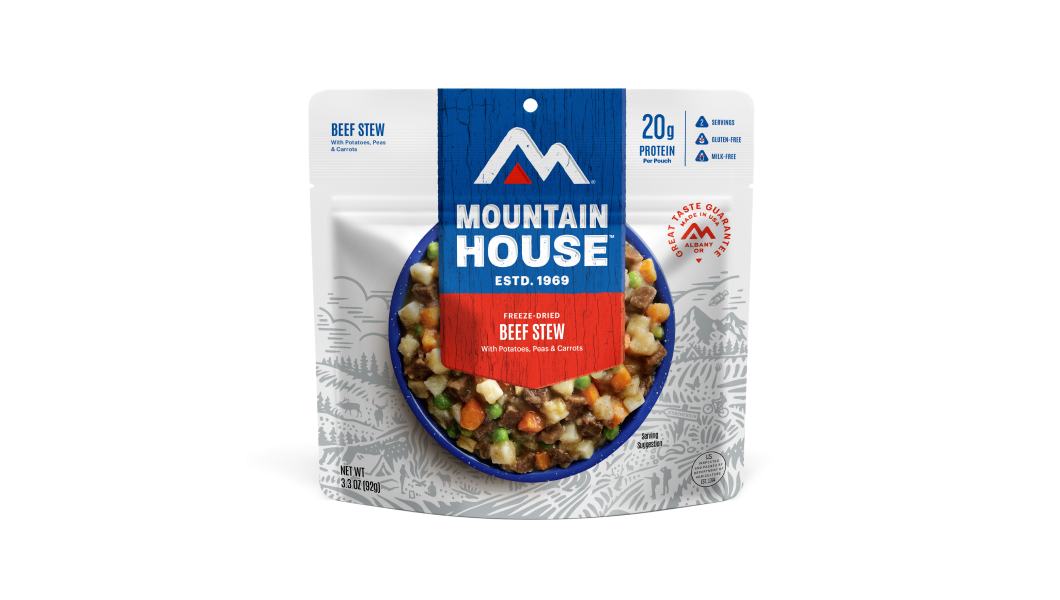
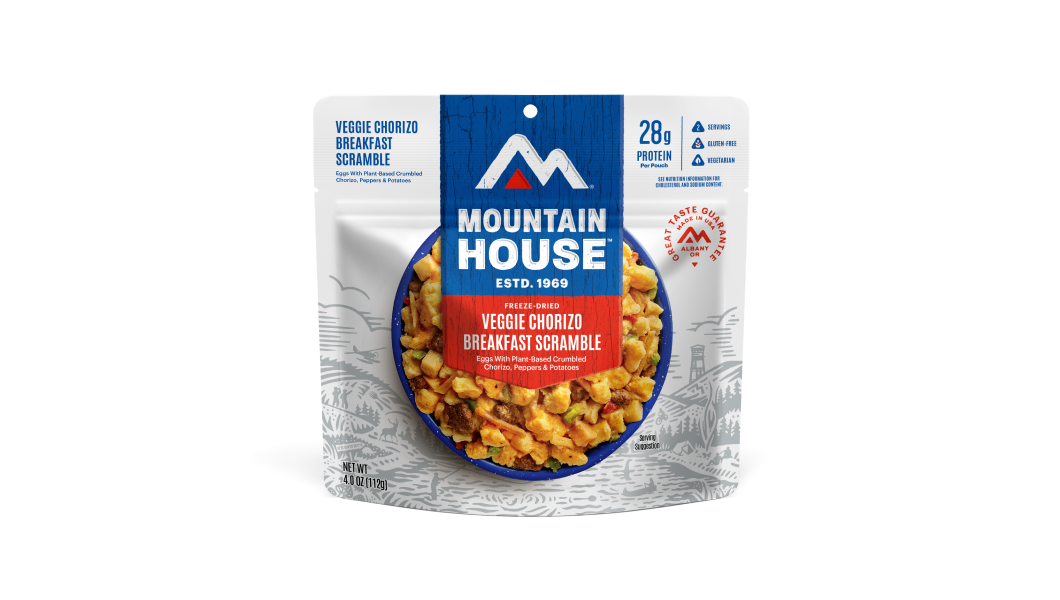
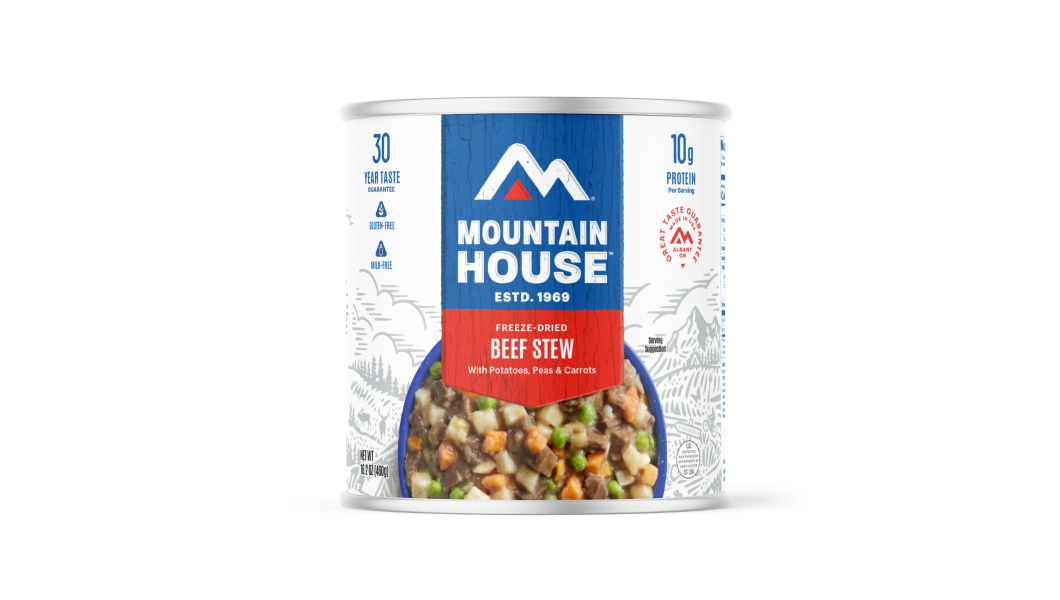
Inspired for an Adventure? Check out Beef Stroganoff - Pouch and Beef Stew - Pouch
Cooking with freeze-dried meat adds a lot of versatility to your kitchen: taco night at a campsite, or chili on a weeknight when your ground beef is frozen solid. Mountain House meats are fully cooked before they're freeze-dried, so there's nothing to thaw and no browning needed for doneness. You don't always have to rehydrate them first, either. Soup, chili, and any sauce with enough liquid will do that job right in the pot.
What Is Freeze-Dried Meat and How Is It Made?
Freeze-dried meat is real, cooked meat with the water removed. Mountain House meats are cooked in small batches, then freeze-dried. During freeze-drying, the frozen water leaves the food as vapor under vacuum. The result is lightweight, shelf-stable meat that's ready to take water back in when you're ready to use it.
The ingredient lists are short. Our Ground Beef is beef, rosemary extract, and salt. Our Diced Chicken is chicken and salt. Both are gluten-free and dairy-free, with no artificial flavors, colors, or preservatives.
The freeze-dried meats lineup comes in #10 cans, with different cuts for different kinds of cooking.
-
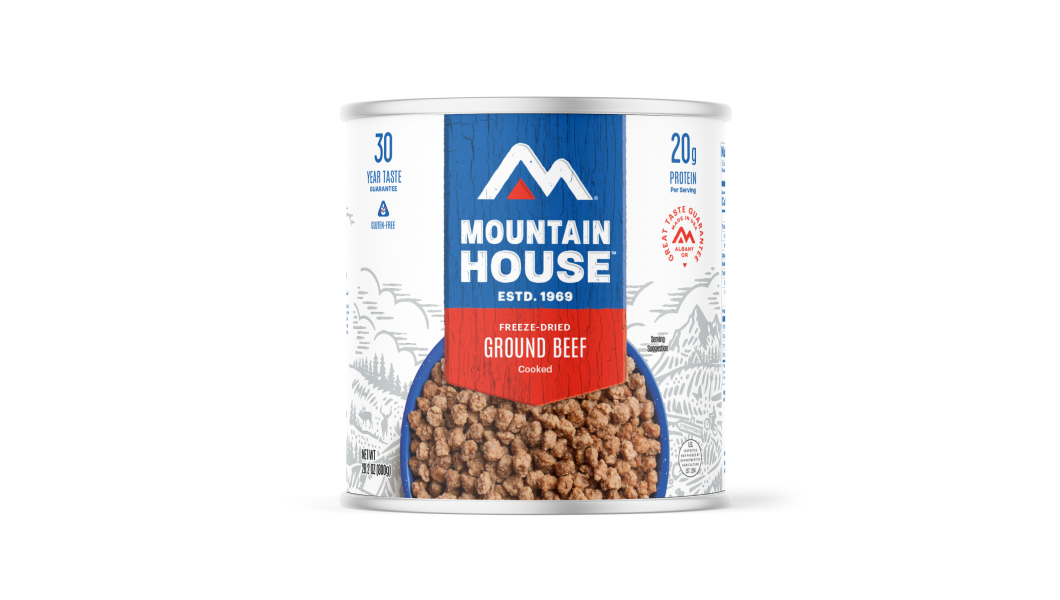
Ground Beef. Cooked crumbles for tacos, chili, and pasta sauce. One can holds 22 servings, with 20 grams of protein per serving.
-
Diced Chicken. Cubes for soups, rice bowls, and casseroles. One can holds 14 servings, with 25 grams of protein per serving.
-
Grilled Sliced Chicken. Strips for wraps, fajitas, and salads. One can holds 24 servings, with 15 grams of protein per serving.
-
Diced Beef. Chunks for stews, stroganoff, and pot pie.One can holds 15 servings, with 27 grams of protein per serving.
-
Pork Sausage. Crumbles for breakfast scrambles, gravy, and pizza. One can holds 25 servings, with 11 grams of protein per serving.
How Do You Rehydrate Freeze-Dried Meat?
Hot water is the straightforward method, and it takes 10-15 minutes. Water amounts and directions vary by meat.
-
Scoop out the amount you need. You can prepare one serving or the whole can.
-
Add the amount of hot water listed on the can.
-
Stir, cover, and wait 10-15 minutes.
-
Drain extra water when the dish calls for drier meat, or keep it as a light broth when it works with the recipe.
-
Use the rehydrated meat as you would any other cooked meat.
For portioning, one serving of Ground Beef is 1/2 cup dry, and a can holds 22 servings. One serving of Diced Chicken is 3/4 cup dry, which makes about 1 cup prepared, and a can holds 14 servings. Cold or room-temperature water works too, just give it about 30 minutes.
Rehydrate First or Add It to the Pot
For tacos, wraps, salads, scrambles, pizza, and fried rice, rehydrate the meat first. Those dishes work better when the meat is already tender before it hits the pan or plate. Once it's ready, you can season or finish it the same way you would other cooked meat.
Soup, stew, chili, and pasta sauce are easier. Add the meat dry and let the liquid in the dish do the rehydrating as it simmers. Add a little extra liquid to account for what the meat absorbs.
Broth or seasoned water can add flavor during rehydration. Salt takes a little more judgment because seasoning and sodium vary from product to product, so check the label and taste before adding more. For tacos and fajitas, a quick turn in a hot pan after rehydrating can add a little extra texture.
What Can You Make at Camp?
Freeze-dried meat weighs very little and doesn’t need a cooler, which gives you more freedom than carrying fresh meat into camp. You also don't have to plan every meal around a full can. Portion what you need into a zip-top bag at home for backpacking, and leave the can behind.
One easy use is to add more protein to a meal you already like. Stir Ground Beef into Chili Mac with Beef, or add Diced Chicken to Rice & Chicken. Use a splash of extra hot water so there's enough to cover the added meat. Pork Sausage works the same way at breakfast, either with eggs or mixed into a Breakfast Skillet.
You can also build dinner from basic camp foods. Ground Beef with taco seasoning, tortillas, hot sauce, and hard cheese makes an easy taco night. Diced Chicken works in ramen or instant rice, and one serving adds 25 grams of protein. For a one-pot meal, combine instant rice, Diced Chicken, a bouillon cube, and the dried vegetables you packed.
Our guide on how to upgrade your Mountain House meals has more ways to work add-ins into camp meals.
What Can You Make at Home?
The same cans are useful on ordinary weeknights, especially when you forget to take meat out to thaw. Ground Beef can go straight into chili or pasta sauce. Diced Chicken works in chicken noodle soup or pot pie. Grilled Sliced Chicken gives you a head start on fajitas, wraps, or salads without handling raw chicken first.
Diced Beef belongs in the same kind of pantry rotation. Use it for stew or stroganoff. Pork Sausage works for gravy, breakfast casserole, or pizza. There's no thawing and no pan of grease left from cooking raw meat.
The cans are also useful when the power is out because the protein starts out fully cooked and shelf-stable.
How Long Does Freeze-Dried Meat Last?
Unopened Mountain House #10 cans carry a 30-year shelf life, backed by our 30-Year Taste Guarantee. If a can ever fails to satisfy within that window, we'll replace it.
Store cans in a cool, dry place away from extreme temperatures and direct sunlight. Once you open one, it's best to use the contents right away. Reseal the can with the included plastic lid and the opened contents are generally good for one week. That's enough time to use the same protein in a few different meals rather than trying to finish the can in one sitting.
How Do You Build Meals Around a Protein Base?
A can gets easier to use when you stop thinking of it as a finished dinner and start with the protein. Ground Beef can become pasta with tomato sauce and Italian seasoning. Diced Chicken works with rice, dried or frozen vegetables, and soy sauce or curry powder. Diced Beef can go with potatoes, carrots, and gravy mix.
Breakfast is just as straightforward. Pork Sausage works with eggs, hash browns, and cheese. The same approach is useful for an emergency pantry because rice, beans, pasta, and oats are inexpensive and store well, while the protein gives those staples more ways to turn it into a real meal.
Pair the meats with other #10 cans when you're planning for a group. For trips where protein is a bigger part of the food plan, our guide to high-protein freeze-dried meals for hunting trips goes further into that use case.
Frequently Asked Questions
Is freeze-dried meat already cooked?
Yes. Mountain House meats are fully cooked before they're freeze-dried, so you only need to add water. There's no raw meat to handle and no risk of undercooking.
How long does freeze-dried meat take to rehydrate?
Allow 10-15 minutes with hot water, or 20-30 minutes with cold or room-temperature water. Follow the directions on the can for each meat.
Can you add freeze-dried meat directly to soup or chili?
Yes. Add it dry and let it rehydrate as the dish simmers, with a little extra liquid to make up for what the meat absorbs.
Does freeze-dried meat need refrigeration?
Not before it's opened. After opening, reseal the can with the included lid and use it within about a week. Treat rehydrated meat like any other cooked meat and eat it promptly.
How many servings are in a #10 can?
It varies by meat. Ground Beef has 22 servings per can, and Diced Chicken has 14.
Is freeze-dried meat gluten-free?
Our Ground Beef and Diced Chicken are both gluten-free and dairy-free. Check the label on each product for the allergen information that applies to you, since recipes can change.
Keep Food on the Shelf
Mountain House has been making freeze-dried food since 1969, and we freeze-dry it at our plant in Albany, Oregon. Our meats carry the same 30-year shelf life as the rest of the lineup. Stock up today on freeze-dried meats and keep a protein option ready on the shelf.
How the #10 Can System Works
Off-Grid Tailgating Meals