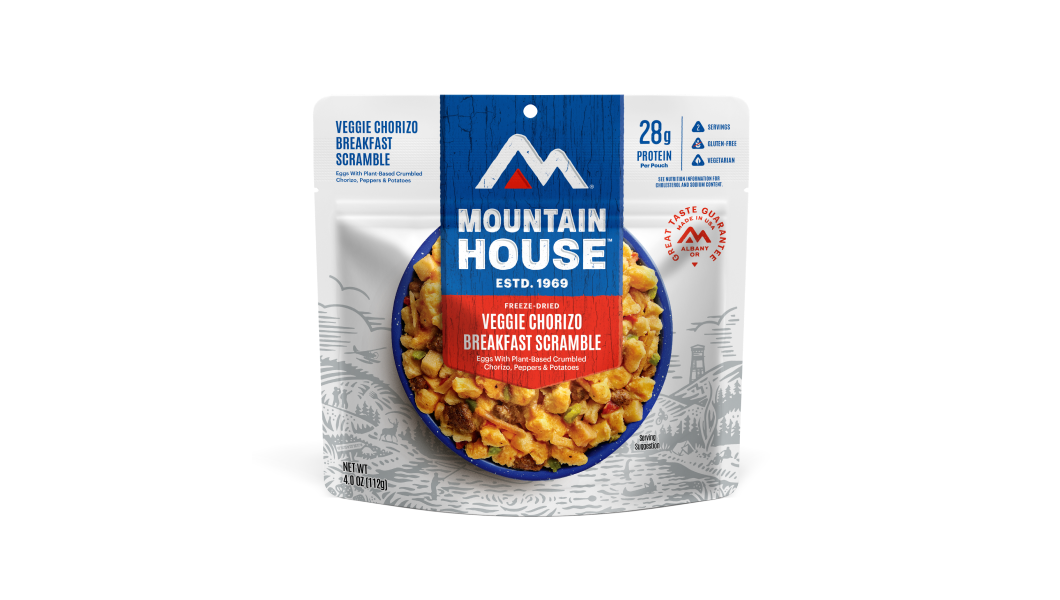
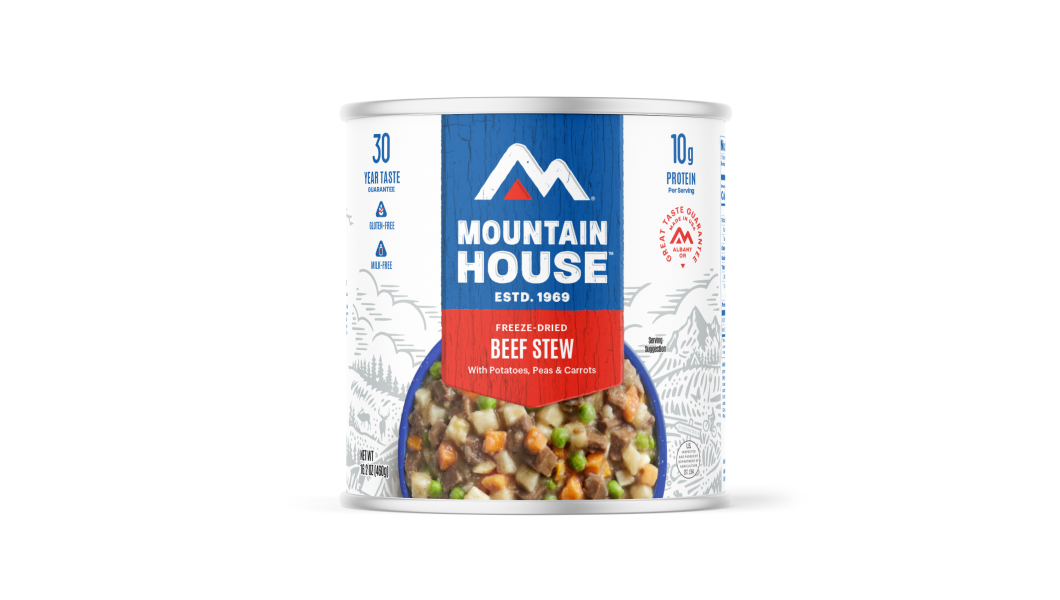
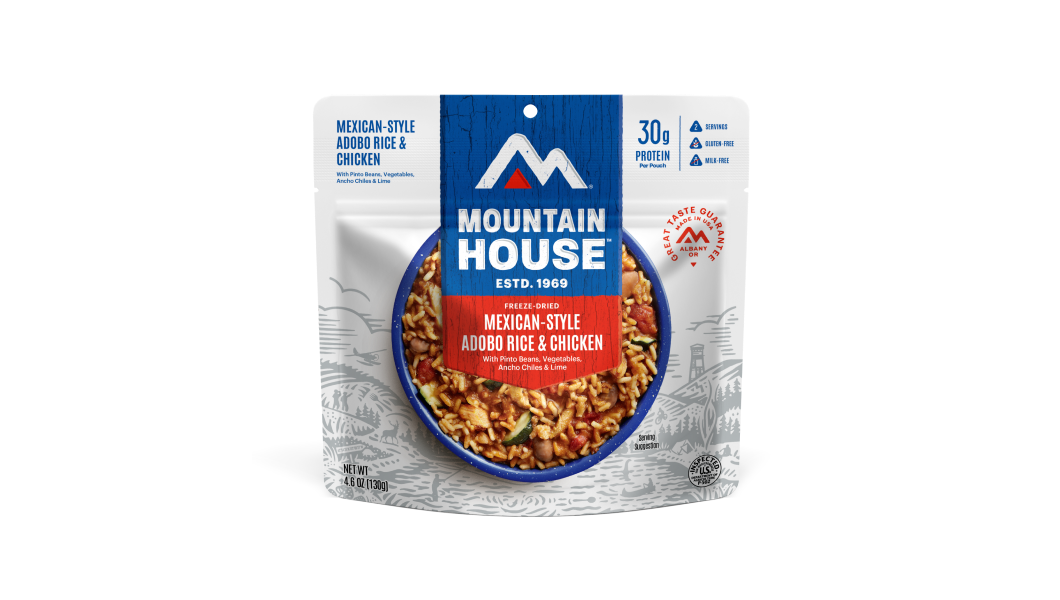
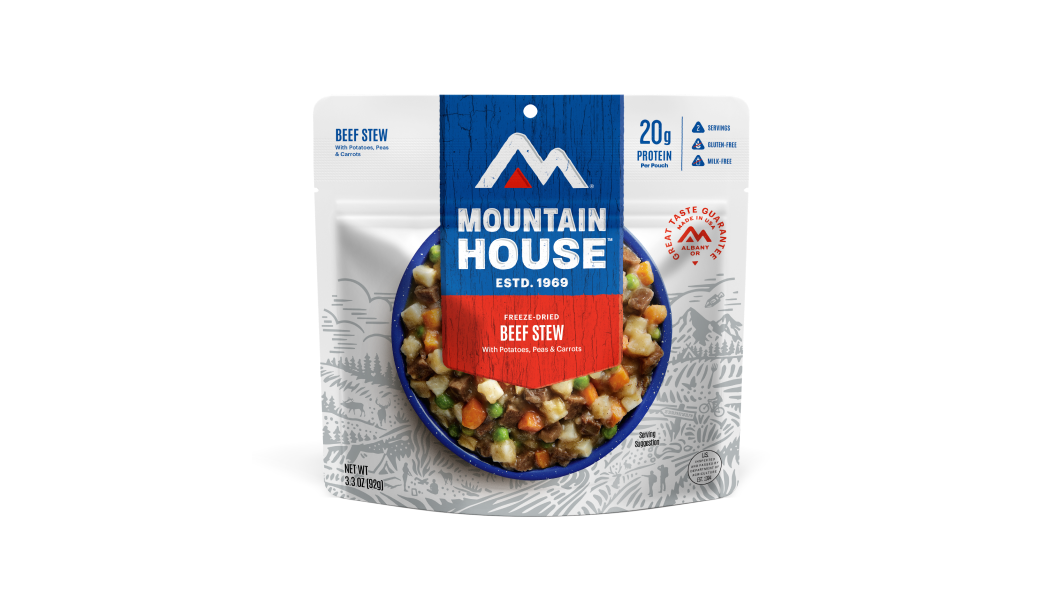
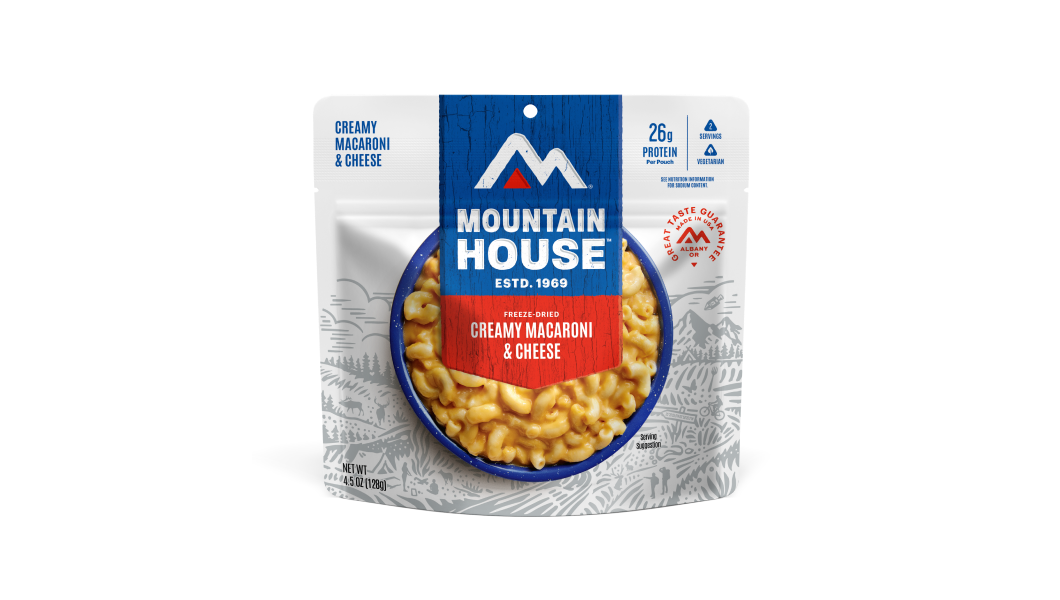
Inspired for an Adventure? Check out Beef Stroganoff - Pouch and Beef Stew - Pouch
Unopened Mountain House #10 cans carry a 30-year shelf life. The system is pretty simple: cook the food, freeze-dry it, seal it in a steel can, and store it properly. The result is long-term food that can sit on a pantry shelf for years. A #10 can also solves a different problem than a pouch. It's built for more servings, so it makes more sense when you're feeding a household, stocking a pantry, or cooking for a group. Additionally, our #10 cans are coated with a food-grade enamel inside and out to protect the steel from rust.
What Is a #10 Can and How Much Does It Hold?
"#10" is a can size, not a weight. Mountain House uses the format for larger quantities of freeze-dried meals and proteins. The serving count changes by product because the foods have different weights and densities.
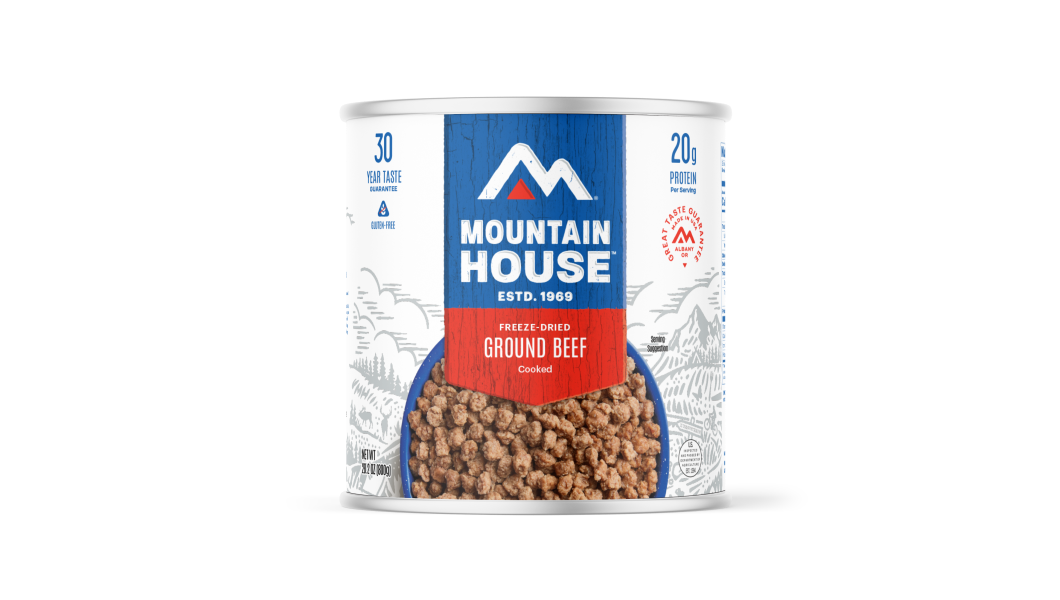
Buffalo-Style Mac and Cheese has 8 servings with 19 grams of protein, Diced Chicken holds 14 servings, with 25 grams of protein per serving. Ground Beef holds 22 servings, with 20 grams of protein per serving. Check the label on each can for its exact count.
Our #10 cans collection includes meals, breakfasts, and plain proteins, so one pantry shelf can cover a variety of meals.
Quick facts
-
Shelf life. 30 years, unopened and properly stored.
-
Storage temperature. Avoid prolonged exposure above 75 degrees F to maximize shelf life.
-
After opening. Use the contents right away, or reseal with the included plastic lid and use within one week.
-
Prep. Add hot water and wait 10-15 minutes. Follow the directions on the can.
-
No power. Cold water works too. Allow 20-30 minutes.
-
Guarantee. Backed by a 30-Year Taste Guarantee.
How Is a 30-Year Shelf Life Achieved?
It starts with quality cooked food. Mountain House has been making freeze-dried food since 1969, and we freeze-dry it at our plant in Albany, Oregon. Our meals are cooked in small batches, then freeze-dried. Plain proteins are also fully cooked before freeze-drying.
During freeze-drying, the cooked food is frozen, and the frozen water leaves it as vapor under vacuum. Removing that moisture limits microbial growth and helps preserve flavor and texture. Once the food is dry, the rigid steel protects it during storage and gives you a container that's easy to stack on a pantry shelf.
Good storage techniques are important. Keep cans in clean, dry conditions, protect them from dents or punctures, and avoid prolonged exposure to extreme temperatures, especially above 75 degrees F.
What Is the 30-Year Taste Guarantee?
The 30-year shelf life is backed by our 30-Year Taste Guarantee. If you aren't satisfied with a meal during its shelf life, we'll replace it with a pouch or #10 can of equal or comparable value.
The guarantee applies to food purchased from our website or an authorized reseller and stored properly. Keep the package and its date code. A claim also requires an explanation of what went wrong. Ice cream is excluded. Check out our shelf lifepage for the full terms and contact details.
Should You Store Cans or Pouches?
Cans and pouches solve different problems. A #10 can works well in a home pantry or anywhere you're feeding several people. You can prepare the whole can at once, or scoop out only what you need and save the rest by resealing with the included lid.
Pouches are best for grab-and-go meals. They're lighter, pack flat, and double as the bowl once they're prepared. They work well in go-bags and trip bins where space and portability matter more than serving a crowd.
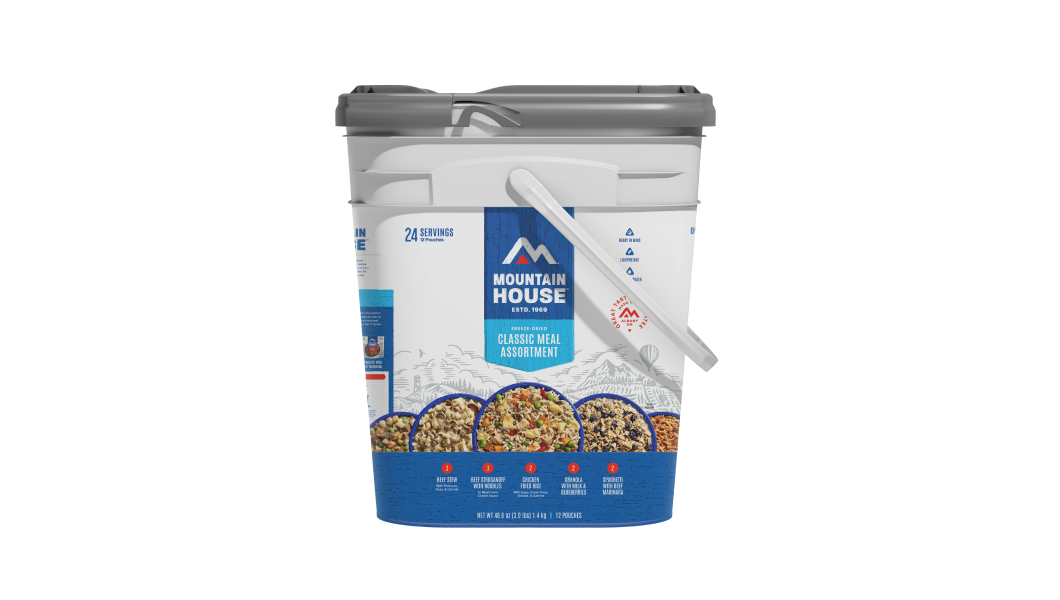
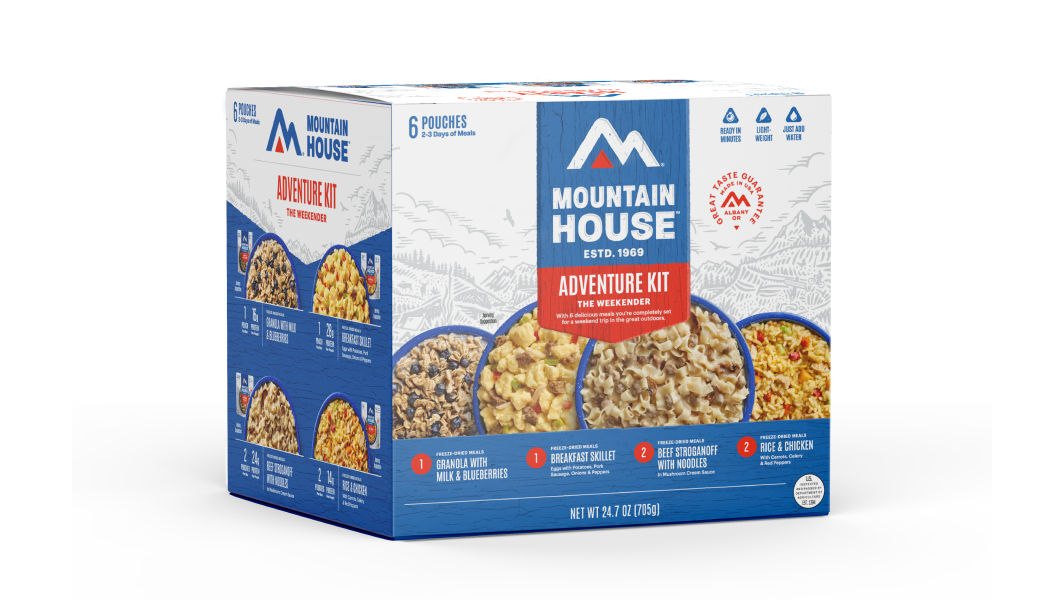
Assortment buckets and emergency food kits land between those two. They group a variety of pouches into one container, and many kits are organized around three meals a day.
A simple way to think about it is cans for crowds and pouches for personal use. Whether you’re enjoying a meal at home or hitting the road for a quick backpacking trip, a pouch works great for one or two people. #10 Cans are better served for families and large groups and should be used within one week of opening (plenty of time to enjoy leftovers!).
How Do You Store and Rotate #10 Cans?
A 30-year shelf life means you aren't constantly moving cans in and out of the pantry. Choose a cool, dry indoor spot and set the shelf up once. An interior closet or space under a bed is usually easier to control than a garage or attic. Avoid prolonged exposure above 75 degrees F, so a garage or attic may not be suitable when it regularly gets hotter than that.
Write the purchase date on the lid with a marker and use the oldest cans first. Stack them carefully so the cans don't get dented. Most of your day-to-day rotation will happen around the shorter-life foods stored nearby, such as canned goods, snacks, and staples. Our guide on how to rotate emergency food walks through that system.
A note: you don’t have to wait for an emergency to enjoy a can! Cooking from one tells you what your household actually likes, how much a serving looks like in the bowl, and how the prep fits into a normal meal.
How to use a can once it's open
-
Scoop out the servings you need, or prepare the whole can.
-
Add the amount of hot water listed on the label.
-
Stir, cover, and wait 10-15 minutes.
-
Snap the plastic lid back on the can and use the rest within one week.
Planning a full supply? Start with water and a calorie target, then build around cans as the long-life core. Our guide to building a 30-day emergency food supply lays out the numbers.
Frequently Asked Questions
What does 30-year shelf life mean?
It means the unopened food will keep for 30 years under proper storage conditions. Mountain House backs that with the 30-Year Taste Guarantee.
How long does a #10 can last after opening?
It's best to use the contents right away. Resealed with the included plastic lid, an opened can is good for one week.
How many servings are in a #10 can?
It depends on the food. Buffalo-Style Mac and Cheese has 8 servings, Diced Chicken has 14, and Ground Beef has 22. Check the label on each can.
Where should I store #10 cans?
A cool, dry, indoor spot. Avoid prolonged exposure above 75 degrees F, so a garage or attic may not be suitable if it regularly gets hotter than that.
Can you prepare #10 can meals without power?
Yes. Mountain House meals are fully cooked before they're freeze-dried, so cold or room-temperature water works it just takes about twice as long.
Stock Once, Stay Ready for Decades
A shelf of #10 cans is a low-maintenance way to keep real meals on hand. They're cooked in small batches, then freeze-dried, and sealed to carry a 30-year shelf life. The emergency food and survival meals collection also includes buckets and kits. Stock up today on #10 cans and build the shelf around the way your household actually eats.
Cooking With Freeze-Dried Meats
Off-Grid Tailgating Meals